
Last Updated: September 4, 2026
Canada’s latest Express Entry draw has once again sent a clear message to prospective immigrants:
Healthcare and social services professionals continue to be highly valued in Canada’s immigration system.
On September 4, 2026, Immigration, Refugees and Citizenship Canada (IRCC) issued 3,500 Invitations to Apply (ITAs) in a category-based Express Entry draw targeting candidates in Healthcare and Social Services Occupations.
The minimum CRS score was 475.
This is particularly important for international students and temporary residents in Canada who are considering their long-term pathway to permanent residence.
Choosing the right education program is no longer simply about obtaining a Canadian credential. For many students, it is also about building a career that aligns with Canada’s labour-market and immigration priorities.
And in 2026, healthcare remains one of those priority areas.
September 4, 2026: Healthcare Express Entry Draw at CRS 475
Today’s Express Entry draw targeted candidates in the Healthcare and Social Services Occupations category.
Draw at a glance
Detail September 4, 2026
Draw category Healthcare and Social Services Occupations
Invitations issued 3,500
Minimum CRS score 475
Tie-breaking date May 26, 2026
Draw type Category-based selection
Candidates needed a CRS score of at least 475 and had to have created their Express Entry profile before the applicable tie-breaking date and time.
The significance of today’s draw becomes even clearer when we look at the previous healthcare draw.
On June 25, 2026, IRCC invited 4,000 healthcare and social services candidates, also with a CRS cut-off of 475.
That means healthcare candidates have now seen two consecutive healthcare-focused draws at CRS 475.
Why Healthcare Is So Important for Canadian Immigration
Canada has a continuing need for workers across healthcare and social services.
This is reflected not only in employment opportunities but also in the way IRCC has structured Express Entry category-based selection.
Rather than relying exclusively on general Express Entry draws, IRCC can specifically select candidates whose skills and experience fall within priority categories.
Healthcare and social services is one of those categories.
For immigration candidates, this creates an important distinction:
Your occupation can matter just as much as your CRS score.
A candidate with a CRS score that may not be competitive in a Canadian Experience Class or general-type draw could potentially have another opportunity if they qualify for a category-based draw.
However, being employed in healthcare does not automatically guarantee an ITA. Candidates must still meet the requirements of an eligible Express Entry program, satisfy the category requirements and have a CRS score high enough for the particular draw.
Healthcare Education Can Be a Strategic Career Decision
For students choosing a program in Canada, it can be tempting to select a program simply because it is short, inexpensive or convenient.
But students who are thinking about permanent residence should look at the bigger picture.
A Canadian education can potentially provide:
- A Canadian credential
- Skills for employment
- Canadian work experience
- Eligibility for a post-graduation work permit, where applicable
- An opportunity to build an Express Entry profile
- Potential access to category-based immigration pathways
Healthcare-related education can be particularly interesting because the eventual occupation may align with Canada’s healthcare and social-services immigration priorities.
The key is to understand the difference between the program you study and the occupation you eventually work in.
Completing a healthcare-related program does not automatically place someone into a healthcare Express Entry category.
The candidate generally needs qualifying work experience in an eligible occupation and must satisfy the applicable category requirements.
Which Healthcare Occupations Can Be Relevant?
The Healthcare and Social Services category covers a range of occupations.
Depending on the specific version of IRCC’s eligible occupation list and the candidate’s circumstances, examples can include occupations such as:
- Registered nurses and registered psychiatric nurses
- Licensed practical nurses
- Nurse aides, orderlies and patient service associates
- Pharmacists
- Physiotherapists
- Occupational therapists
- Medical laboratory technologists
- Medical radiation technologists
- Respiratory therapists
- Dental hygienists and dental therapists
- Social workers
- Social and community service workers
- Other qualifying healthcare and social-service occupations
The exact NOC classification matters.
Having the word “healthcare” in a job title is not enough.
IRCC assesses the actual duties performed and whether the work experience corresponds to the applicable National Occupational Classification (NOC).
This is why students and temporary residents should be careful when planning their education and employment pathway.
Healthcare Program vs. Healthcare Occupation: Know the Difference
This is one of the most important points for international students.
Suppose a student completes a healthcare-related diploma.
That diploma alone does not necessarily mean the student qualifies for a healthcare-focused Express Entry draw.
The student may need to:
- Complete an eligible program.
- Obtain appropriate work authorization.
- Find qualifying employment.
- Accumulate the required work experience.
- Ensure the job duties correspond to an eligible NOC.
- Meet the requirements of an Express Entry program.
- Meet the requirements of the healthcare category.
- Have a competitive enough CRS score when IRCC conducts the draw.
Therefore, program selection should be connected to career planning.
A student should ask:
“What occupation will this program prepare me for, and could that occupation support my long-term immigration strategy?”
That is a much more useful question than simply asking:
“Which program is easiest to complete?”
Today’s CRS 475 Draw Is Important — But Don’t Misread It
A CRS cut-off of 475 is certainly significant.
But candidates should not interpret today’s draw to mean:
“If I work in healthcare, I will automatically receive PR at 475.”
That would be incorrect.
The 475 CRS score applied to this specific draw.
Future draws can have:
- Different CRS cut-offs
- Different numbers of invitations
- Different tie-breaking dates
- Different category requirements
IRCC can also change its immigration priorities.
Today’s result should therefore be viewed as an indication of the value Canada is currently placing on healthcare and social services—not as a guarantee of future selection.
Healthcare vs. General Express Entry
The difference between category-based selection and other Express Entry rounds can be substantial.
For example, immediately before today’s healthcare draw, IRCC held a Canadian Experience Class draw on September 1, 2026, with a CRS cut-off of 521.
Today’s healthcare draw had a cut-off of:
475
That is a difference of 46 CRS points.
This illustrates why candidates should not look at their CRS score in isolation.
A candidate with a CRS score that is not competitive for one Express Entry round may still have another potential pathway if they qualify under an applicable category.
Healthcare Has Already Received Thousands of Invitations in 2026
Today’s draw was not an isolated event.
According to the latest 2026 Express Entry draw data, IRCC has conducted three Healthcare and Social Services draws this year.
The healthcare category has received:
- 4,000 ITAs — February 20
- 4,000 ITAs — June 25
- 3,500 ITAs — September 4
That represents 11,500 invitations through healthcare and social services category draws in 2026 so far.
For someone planning a Canadian immigration strategy over several years, this pattern is worth paying attention to.
Should International Students Consider Healthcare Programs?
There is no single program that guarantees permanent residence.
However, students who genuinely want to build a career in healthcare may find that their education and employment can align with Canada’s current immigration priorities.
Before selecting a program, consider:
1. Is the program eligible for a PGWP?
Not every Canadian program or institution provides the same post-graduation work permit outcome.
Students should confirm current PGWP eligibility before enrolling.
2. What occupation will the program lead to?
Look beyond the program title.
Research the likely occupation, NOC and employment opportunities.
3. Is the occupation included in the current healthcare/social services category?
Immigration categories can change, so this should be checked against the current IRCC requirements.
4. Can you realistically find qualifying employment?
A program may look attractive on paper, but employment opportunities, licensing and provincial requirements can be equally important.
5. Will the occupation require licensing?
Many healthcare professions are regulated in Canada.
For example, completing an educational program does not necessarily mean a person can immediately practise as a regulated healthcare professional.
Licensing requirements vary by occupation and province.
6. What will your CRS score look like?
Education and work experience are only parts of the CRS calculation.
Age, language ability, Canadian work experience, foreign work experience, spouse factors and other elements can affect the final score.
French + Healthcare Could Be an Even Stronger Strategy
Healthcare candidates should also consider Canada’s French-language immigration priorities.
French-language proficiency is itself an Express Entry category.
In fact, the most recent French-language draw before today’s healthcare draw invited 5,000 candidates at a CRS cut-off of 382 on August 19, 2026.
This means that someone working in an eligible healthcare occupation who also develops strong French-language ability may potentially have more than one category-based strategy to consider.
For eligible candidates, achieving the required French-language level can open the door to the French-language proficiency category, while their healthcare work experience may provide another potential avenue.
This is why immigration planning should be holistic.
Don’t look at your occupation, education and language scores separately. Look at how they work together.
Healthcare Students Should Think Beyond Graduation
One of the biggest mistakes students can make is waiting until graduation to think about permanent residence.
Immigration planning should ideally begin before choosing the program.
For example:
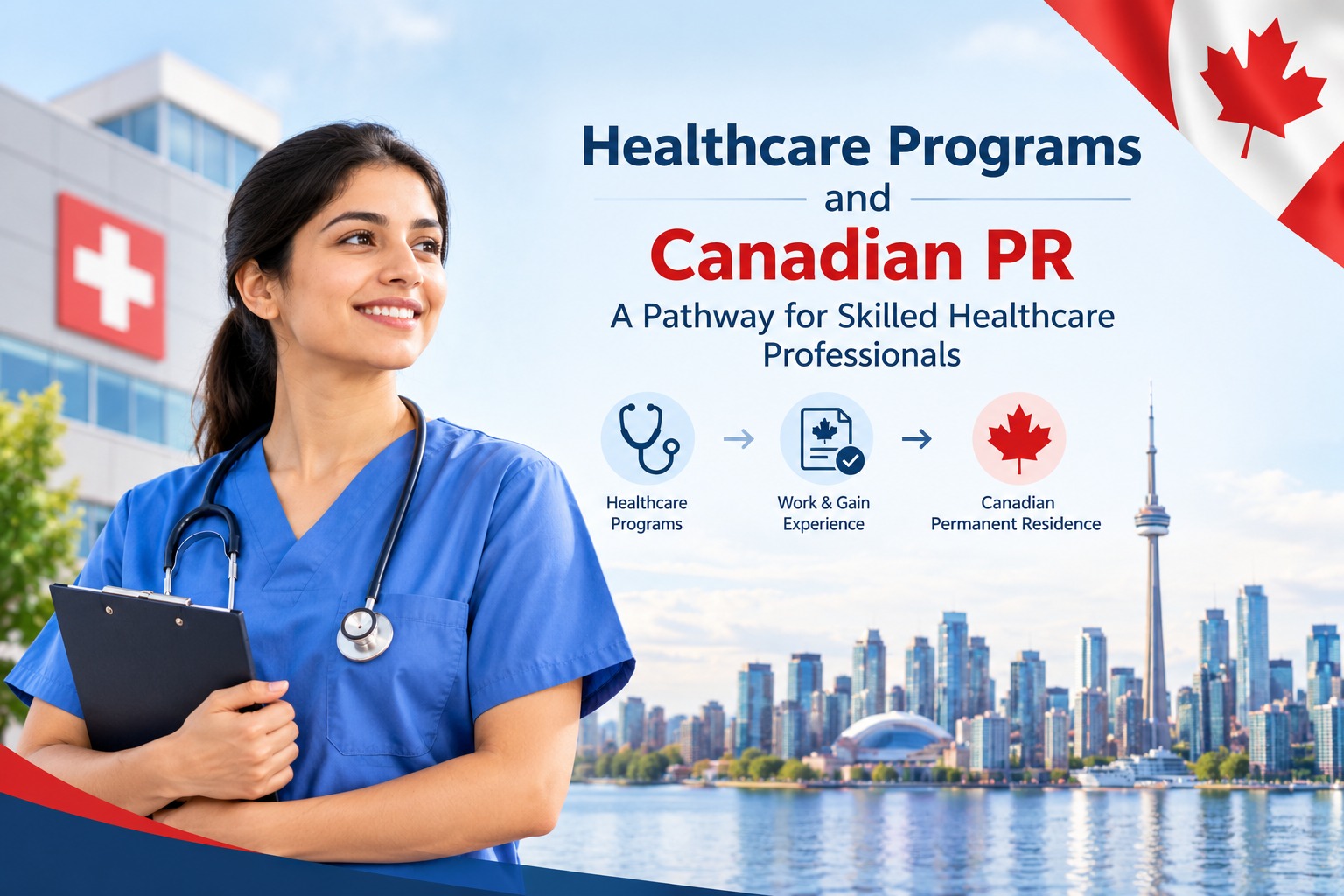
Education → Work Authorization → Healthcare Employment → Canadian Work Experience → Express Entry → Category-Based Selection
This is not a guaranteed pathway, but it demonstrates how education and immigration planning can be connected.
Students should also monitor changes to:
- PGWP rules
- Express Entry categories
- NOC classifications
- CRS requirements
- Provincial nominee programs
- Healthcare licensing requirements
- Language requirements
Canadian immigration policy can change, and a strategy that works today may look different several years from now.
What Today’s Draw Means for Healthcare Workers
Today’s draw is another reminder that Canada’s immigration system is increasingly focused on skills and occupations that address labour-market needs.
The September 4 draw issued 3,500 invitations at CRS 475 to healthcare and social services candidates.
For healthcare professionals already working in Canada, this may be a good time to review their Express Entry profile.
For international students considering their education options, it is worth looking beyond the immediate goal of obtaining a Canadian credential.
And for temporary residents already working in healthcare, it may be worth determining whether their current occupation, work experience and CRS score could position them for category-based selection.
Final Thoughts
Canada’s latest Express Entry draw sends a clear message:
Healthcare and social services occupations continue to be an important part of Canada’s economic immigration strategy.
Today’s 3,500 invitations at CRS 475 demonstrate that healthcare candidates can have opportunities through category-based Express Entry selection that may differ significantly from other Express Entry rounds.
But the right immigration strategy is not simply:
“Study healthcare = get PR.”
It is much more nuanced.
The stronger approach is to consider the complete pathway:
Choose an appropriate program → understand the resulting occupation → obtain qualifying work experience → improve language scores → calculate CRS → identify applicable Express Entry categories → monitor draws and immigration policy.
For students considering healthcare education in Canada, the choice of program can therefore have implications far beyond graduation.
Thinking About Studying Healthcare in Canada?
Before choosing a program, speak with an immigration professional about how your education, occupation, work experience, language scores and long-term permanent residence goals may fit together.
At Red Swan Immigration Consultancy Inc., we help students and temporary residents understand their potential Canadian immigration pathways and make informed decisions based on their individual circumstances.
Your program choice is an education decision—but it can also be an important part of your long-term immigration strategy.
This article is for general information purposes only and does not constitute legal advice or a guarantee of permanent residence. Express Entry categories, eligible occupations, CRS cut-offs and immigration requirements can change. Information is current as of September 4, 2026 and should be verified against current IRCC requirements before making immigration or educational decisions.